

The Woods We Build With: Rubberwood, Plywood and Beech
Every piece we make starts as timber, and the wood it starts as shapes how it feels, how it wears and how long it lasts in a busy home. Our furniture is built from three woods, each picked for what it does best: solid rubberwood, plywood and beech. This guide walks through what sets the three apart, where we use each one and why, how they hold up to years of handling, and how to think about the choice when the same piece is offered in more than one wood.
In This Article:
- Why the Wood Matters in Kids' Furniture
- Rubberwood: The Everyday Hardwood
- Plywood: Light, Strong and Stable
- Beech: The Premium Upgrade
- When One Piece Uses More Than One Wood
- Finish and Everyday Care
- Frequently Asked Questions
Why the Wood Matters in Kids' Furniture
Furniture for young children lives a harder life than most. It gets climbed on, leaned against, dragged an inch to the left, drawn on and spilled on, often several times a day. The wood a piece is made from decides how it stands up to all of that: how sturdy it feels under a child's weight, how smooth the surface stays, how heavy it is to move, and how well it ages instead of loosening or splitting.
Three qualities do most of the deciding. The first is hardness and density, which is what lets a frame take weight and shrug off knocks. The second is stability, meaning how well a piece keeps its shape as the air turns damp or dry across the seasons rather than warping or cracking. The third is simply weight, which matters on anything a child is meant to push, carry or reposition on their own.
No single wood wins on all three at once, which is why we use three. A dense hardwood makes the best load-bearing frame; an engineered panel stays the truest and travels the lightest; a premium hardwood takes the hardest wear and the cleanest finish. Knowing which is which makes it easier to see why a given piece is built the way it is, and to pick the version that suits your home.
Rubberwood: The Everyday Hardwood
Rubberwood is the wood you will meet most often across our range, and for good reason. It is a dense tropical hardwood with a pale, warm honey tone and a tight, close grain that sands to a smooth surface and takes a clear finish cleanly. It is hard enough to be leaned on, climbed and adjusted for years without feeling flimsy, which is exactly what an everyday piece of kids furniture has to do.
It also carries a quiet sustainability story. The rubber tree spends the first stretch of its life grown for the latex it is tapped for; only once those tapping years are over is the timber harvested and put to a second working life as furniture, rather than the tree being cleared and wasted. So a rubberwood chair starts from a tree that has already earned its keep once.
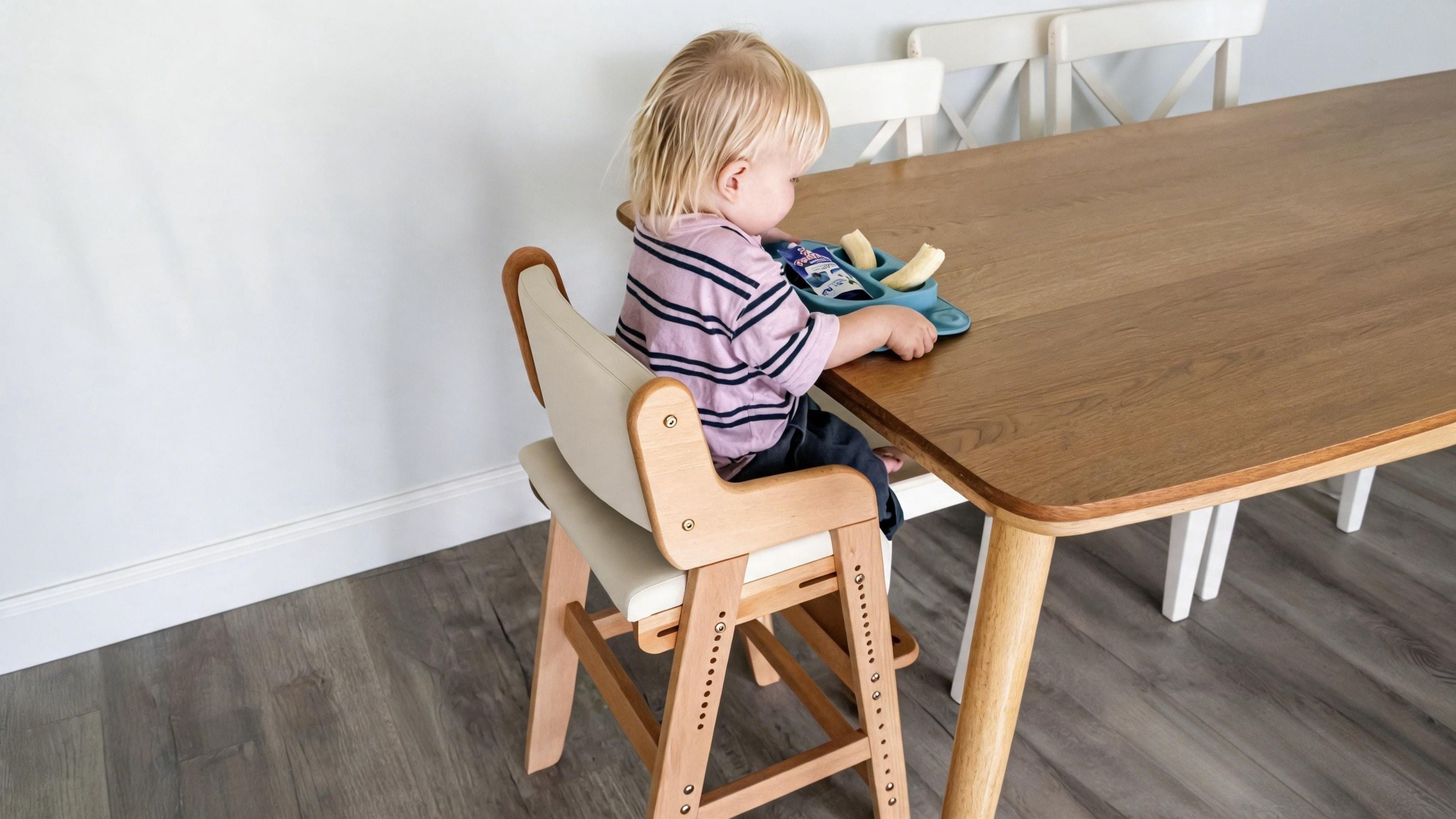
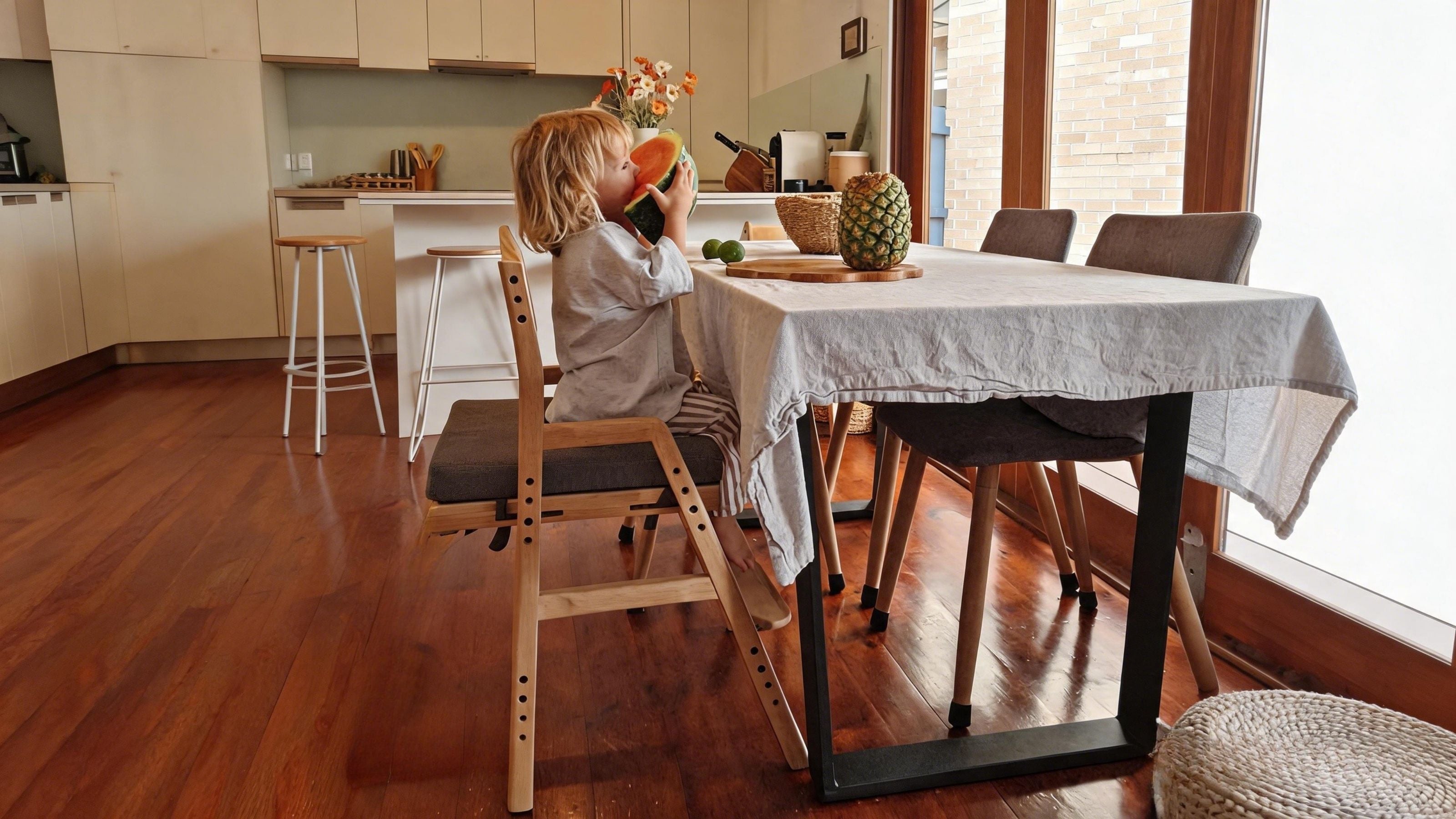
This is the wood we reach for on solid, load-bearing pieces that adjust and get daily use: the KAYA table and chair set, the LINA study chair, the standard AURORA dining chair and much of the desk and chair range. Because it is solid timber through and through, an edge that gets knocked shows bare wood you can sand back, not a chipped skin over something else.

Plywood: Light, Strong and Stable
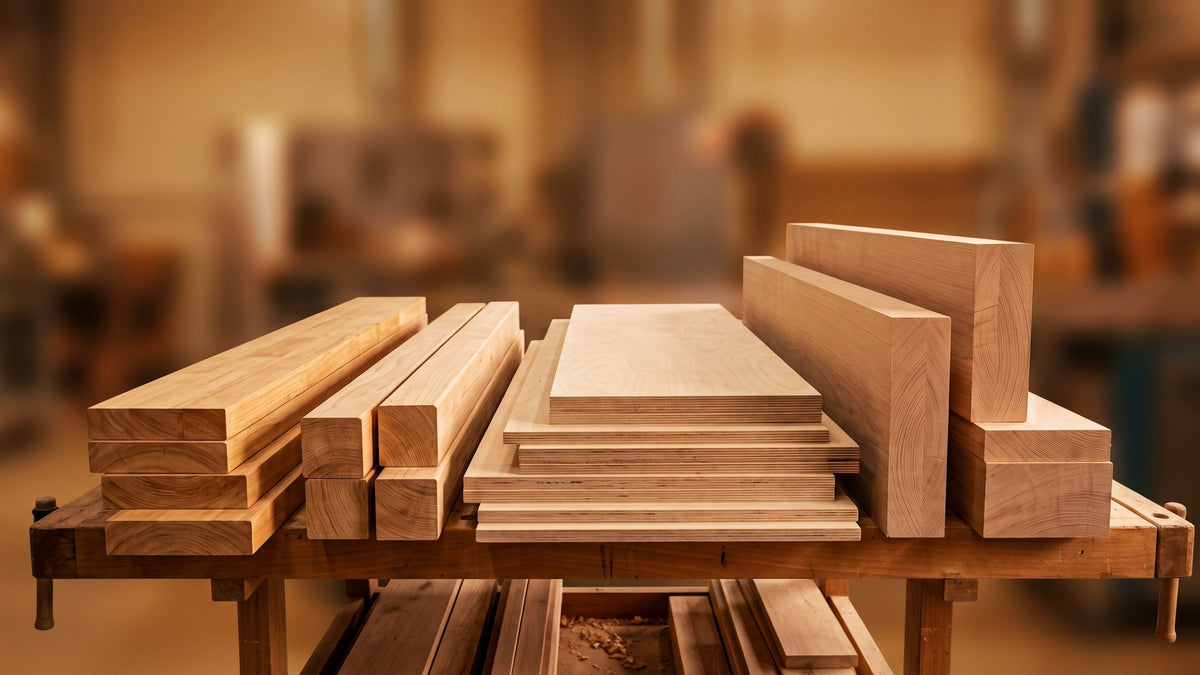
Plywood is an engineered wood, and its strength comes from how it is built. Thin layers of timber, called plies, are glued together with the grain of each layer crossing the one below. That cross-lamination is the whole trick: it makes a panel far stronger for its weight than a single board of the same thickness, and far less likely to warp, cup or split as humidity rises and falls through the year.
The birch plywood we use has a smooth face and a clean, layered edge, and it keeps a flat panel genuinely flat over time. Its best qualities are lightness and stability, so it earns its place on pieces meant to be moved and on wide panels that need to stay true.
You can see this in the ISLA doll pram walker, built from birch plywood so a toddler can push and steer it without wrestling a dead weight. The plywood version of the JALA kitchen tower is made from premium plywood rather than solid rubberwood, which makes the same tower noticeably lighter to lift and shift around a kitchen. And on some pieces plywood does the flat-panel job inside a solid frame, which is where the third wood comes in.

Beech: The Premium Upgrade
Beech is the hardest-wearing of the three. It is a pale, dense hardwood with a very tight, even grain, harder than rubberwood and with a more uniform look. That density lets it take heavy load and shrug off dents, and the fine grain gives a cleaner, more premium surface once it is finished. The trade is a little extra weight, which is the price of the added hardness.
Beech is our upgrade material, the timber behind the pieces marked Pro: the ones that get the hardest use or that families want in the nicest finish. The LOLA Pro kitchen tower is built on a solid beech frame, and the AURORA Pro dining chair steps up to solid beech in place of the standard chair's rubberwood, with wipe-clean cushions added.
The OLI revolving bookcase is beech too, finished in a wax-oil that sits close to the grain and lets the timber show through rather than sealing it under a coating. Where a piece is offered in both woods, beech is the step up in hardness and in the look of the finished surface.

When One Piece Uses More Than One Wood
A well-built piece is rarely a single wood, because different parts ask for different things. A frame that must bear a child's weight wants a dense solid hardwood; a wide platform that must stay flat wants an engineered panel that will not cup. Pairing the two lets each wood do the job it is best at, which is why the LOLA Pro tower sets plywood platforms into a solid beech frame rather than making the whole thing from one or the other.
The other place two woods meet is the choice between a standard piece and its Pro version. The AURORA dining chair is a clear example: the standard chair is solid rubberwood, and the AURORA Pro is the same design in solid beech, with cushions added. Both are solid hardwood and both are hard-wearing; the Pro asks a higher price in return for beech's extra hardness, its more even grain and the upgraded seat.
Neither is a downgrade on the other. Rubberwood is the sensible everyday pick that will serve for years, while beech is worth the step up on the piece you want to be the nicest in the room, or the one you expect to see the roughest handling. Reading the wood a piece is made from tells you where it sits, so you can match the spend to the use.
Finish and Everyday Care
The finish matters as much as the wood underneath. Most of our pieces wear a water-based varnish that seals the surface and wipes clean, which is what you want on furniture that meets porridge, paint and sticky fingers daily. A few, like the OLI bookcase, use a wax-oil that sits closer to the grain for a more natural feel; both keep the timber easy to look after.
Caring for any of the three is much the same and takes very little. Wipe the surface with a damp, not soaking, cloth and dry it off, and skip harsh sprays that can dull the finish over time. Deal with spills before they sit, since even a sealed surface does better without a puddle left on it.
Two habits keep solid-wood pieces in particular looking right. Keep them out of long spells of direct sun or damp, because any real timber moves a little with big swings in humidity, and give the fixings on adjustable pieces an occasional check and a snug turn, since anything raised and lowered over the years will loosen a touch with use. A few minutes now and then is all it takes for a wooden piece to outlast the childhood it was bought for.
Frequently Asked Questions
What wood is your kids furniture made from?
We build with three woods, each for what it does best. Solid rubberwood is the everyday hardwood behind most of our tables, chairs and desks; plywood is used where light weight and a stable flat panel matter, such as the ISLA doll pram and the plywood version of the JALA tower; and beech is the premium upgrade on the Pro pieces.
Is rubberwood or beech better?
Neither is simply better; they suit different needs. Both are solid, hard-wearing hardwoods. Beech is denser and harder with a more even grain and a more premium finish, at a higher price, while rubberwood is the sensible everyday choice that serves for years. Beech is worth the step up on a piece you want to be the nicest in the room or that will see the roughest use.
Is plywood as strong as solid wood?
For the jobs we use it on, yes. Because its layers are glued with the grain crossing at each ply, plywood is very strong for its weight and more stable against warping than a single board. We use it where light weight and a true flat panel matter, and solid hardwood where a load-bearing frame does, so each part gets the wood that fits it.
How do I care for wooden kids furniture?
Wipe it with a damp, not soaking, cloth and dry it off, and avoid harsh sprays that can dull the finish. Deal with spills before they sit, keep solid-wood pieces out of long spells of direct sun or damp, and give the fixings on adjustable pieces an occasional check and a snug turn. That is enough to keep any of the three looking right for years.
Want to see which wood suits your home? Browse the kids table and chairs range and check the material on each piece to match the wood to the way you will use it.





Leave a comment
This site is protected by hCaptcha and the hCaptcha Privacy Policy and Terms of Service apply.