




Kids Study Desks: How to Choose a Height-Adjustable Desk
A child who is comfortable at their desk will sit at it longer, and comfort at a desk is mostly about height. The trouble is that a five-year-old and a nine-year-old are different sizes, so a desk set at one fixed height is wrong for most of the years you own it. A height-adjustable study desk solves that by moving with the child, keeping feet flat on the floor and elbows level with the top from the first year to the last. Here is how to read the height range, the tilting top and the matched chair, so the desk you choose still fits as they get taller.
In This Article:
- Why a Study Desk Needs to Adjust
- Getting the Height Right: Feet, Elbows, Eyes
- Tilting Tops and Why They Help
- Desk-and-Chair Sets vs a Desk Alone
- Storage, Add-ons and Keeping the Desk Clear
- Sizing the Desk to Your Space and Their Age
- Frequently Asked Questions
Why a Study Desk Needs to Adjust
Children grow in steps, not all at once, and a desk that fits at five leaves a nine-year-old hunched over a top that now sits too low. A fixed desk asks the child to fold themselves to the furniture; an adjustable one does the opposite and rises to meet them. That is the single most useful thing a study desk can do, because it is the difference between a desk you replace every couple of years and one that lasts most of primary school.
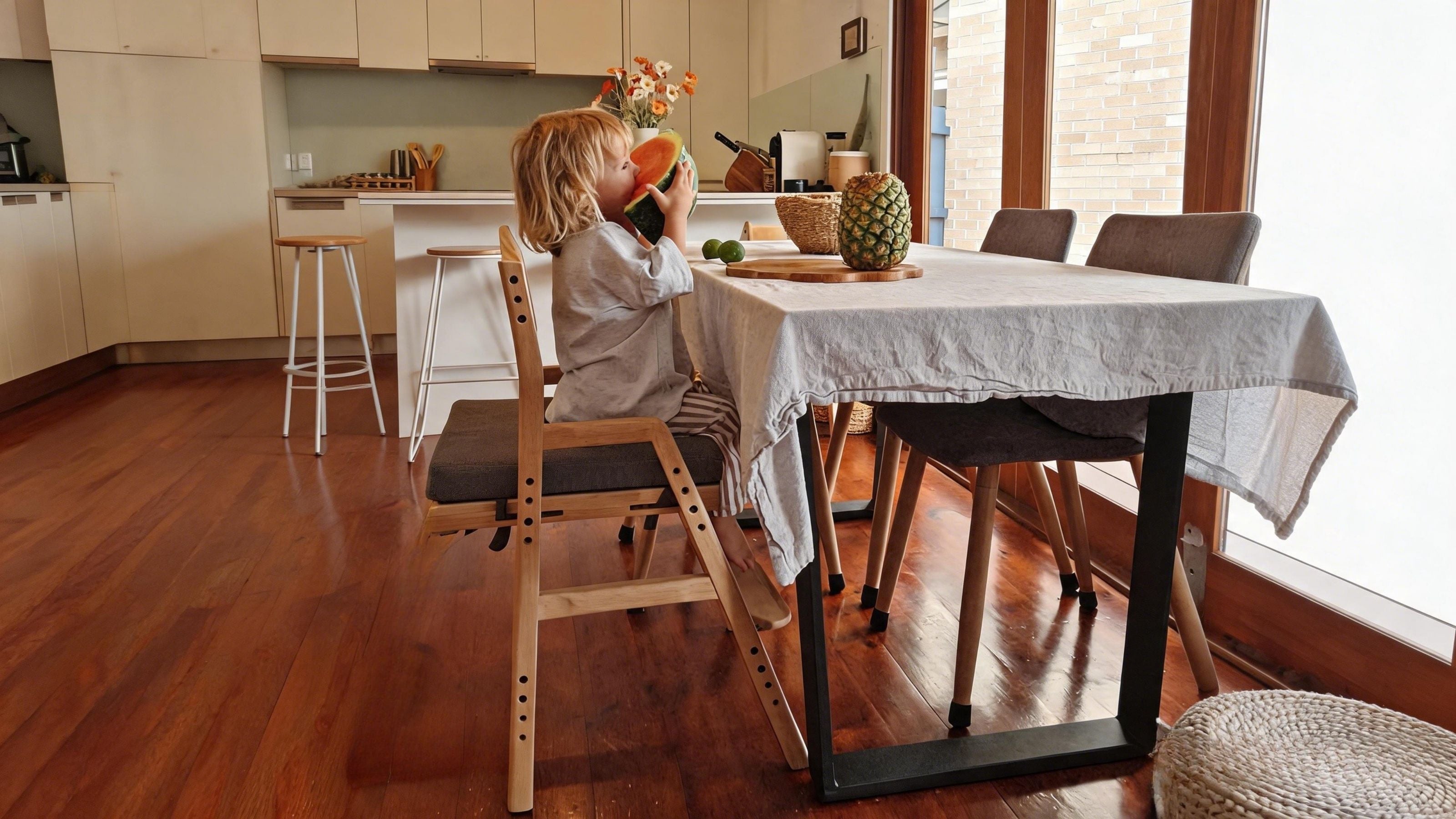
The NALA Study Desk and the KAYA Adjustable Table and Chair Set both raise and lower the top through a range rather than sitting at one height. You set the top where the child is now, and lift it a notch as they grow taller, so the same desk carries them from their first drawing years into homework and reading.
An adjustable desk also earns its keep between children. What suits an older sibling at the top of its range drops back down for a younger one starting out, so one desk serves two ages in turn rather than two desks sitting in two rooms. Solid timber holds that repeated adjustment well, since the frame stays square and steady through years of use.
Getting the Height Right: Feet, Elbows, Eyes
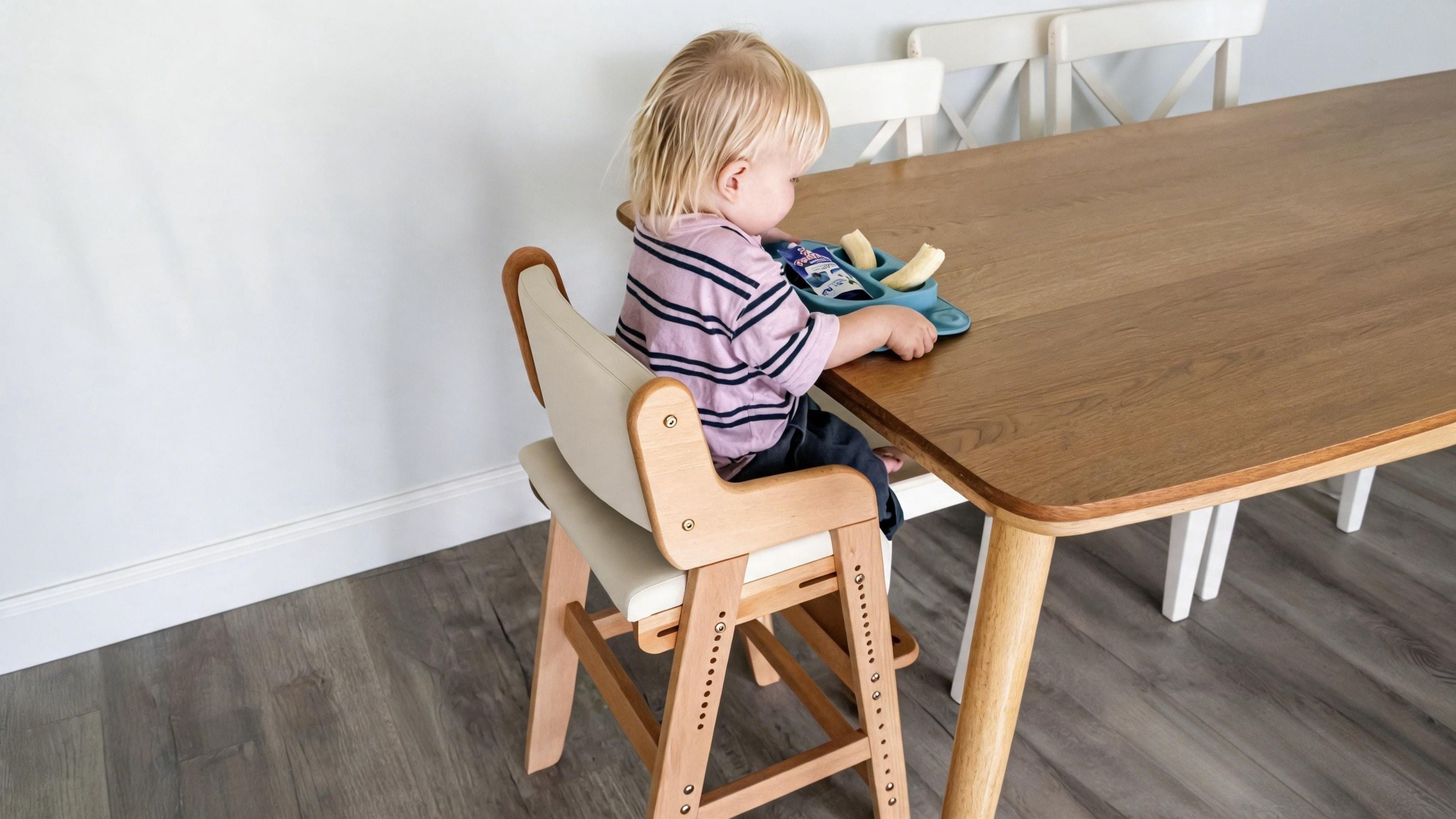
There is a simple test for whether a desk and chair are set correctly. The child sits back in the chair with feet flat on the floor, knees at roughly a right angle. The desk top should then sit at about elbow height, so the forearms rest level while writing rather than reaching up or slumping down. Eyes should fall naturally onto the middle of the page or screen without craning forward.
This is why the desk and the chair need to move together. Raising the top without raising the seat leaves the arms reaching; lifting the seat without a footrest leaves the feet dangling. A matched set such as the ARIA Adjustable Table and Chair Set keeps the two in step, so each time you adjust one you can bring the other with it and hold that feet-flat, elbow-level posture as the child gets taller.
Set the height for the child, not for the room. It is tempting to leave a desk high so an adult can use the surface too, but a top that is a little high turns into a shoulder-hunching desk for a young child. Start from the feet on the floor and work up; the correct height is wherever that test comes out right, and you move it as the years pass.

Tilting Tops and Why They Help
Some study desks tilt the top as well as raise it, and the tilt matters more than it first looks. A flat top is right for writing, where a level surface keeps the paper and the hand steady. A tilted top is better for reading and drawing, because it brings the page up towards the eyes so the child sits taller instead of curling over a flat surface to see.
The NALA Pro Desk with Easel tilts for exactly this reason, and its easel lifts a book or a drawing pad to an angle a child can work at with a straight back. Being able to switch between a flat top for homework and a raised angle for reading means one desk suits both jobs rather than forcing a compromise between them.
If your child spends more time drawing and reading than writing, a tilting top is worth prioritising. If it is mostly homework and worksheets, a flat adjustable top does the core job well and a tilt is a bonus. Either way, judge the tilt by whether it holds firm at the angle you set it, since a top that creeps back down mid-task is more distraction than help.
Desk-and-Chair Sets vs a Desk Alone
You can buy a study desk on its own or as a set with a matched chair, and the right answer depends on what you already own. A set takes the guesswork out of pairing, because the chair is built to reach the desk's range and the two adjust to hold the correct posture together. The Little Scholar Complete Set pairs a desk and chair this way, sized to work as one piece from the day it arrives.
Where two children share a space, a twin set changes the maths. The KAYA Pro Adjustable Table with two chairs seats a pair at one wide top, each on their own adjustable chair, so siblings work side by side without a second desk taking up a second wall. For a shared bedroom or a family study corner that keeps one surface doing the work of two.
Buying the desk alone makes sense only if you already have a chair that adjusts to match its range. A good desk sitting over a chair that is too low or too high undoes the height work you paid for, so if you go the standalone route, sort the chair in the same breath. A matched set is the simpler path for most families setting up a study space from scratch.
Storage, Add-ons and Keeping the Desk Clear
A clear desk is easier to work at than a cluttered one, so where the pens and paper live matters. A shallow drawer under the top keeps the everyday bits off the surface without swallowing them into a deep bin a child forgets to empty. The point is a home for the clutter that a young child can manage on their own, so tidying is a thirty-second job at the end of the day.
For the things you want in sight rather than in a drawer, a small shelf lifts them off the writing surface. The NALA Desktop Shelf sits on the back of the desk and holds books upright and pencils in a pot, leaving the front of the top clear for actual work. It is a simple way to stop a desk silting up with everything a child owns.
Craft and drawing bring their own mess, and a roll of paper solves a lot of it. A paper roller dispenser feeds a fresh sheet across the top and tears off the used one, so drawing has a start and an end rather than a drift of loose pages. Add-ons like these are worth choosing to match the desk, so the surface stays a place a child wants to sit down at.

Sizing the Desk to Your Space and Their Age
Measure the wall before you fall for a desk. A single study desk needs only its own footprint plus room to pull the chair out behind it, which makes it a good fit for a bedroom corner or the end of a shared room. A wider twin top wants a longer clear wall, so it belongs where two children genuinely study together rather than squeezed into a spot meant for one.
Age steers the choice as much as space. For a young child just starting to draw and sit at a surface, a compact adjustable desk at the low end of its range is plenty, and the height it has spare is the room it has to grow into. For an older child with homework and books, prioritise a top wide enough to spread a workbook and a laptop without one pushing the other off the edge.
Whatever the size, come back to the feet-flat, elbow-level test once it is in the room, and set the height for the child using it today. Browse the full kids study desks and chairs range with the wall measurement and the child's current height in hand, and the desk that fits both tends to stand out quickly.
Frequently Asked Questions
What height should a kids study desk be?
Set it by the child, not by a fixed number. With the child sitting back, feet flat on the floor and knees at a right angle, the desk top should sit at about elbow height so the forearms rest level while writing. Because that changes as they get taller, a height-adjustable desk lets you keep hitting it year after year.
Is a tilting desk top worth it?
It helps most for reading and drawing, where a tilt lifts the page towards the eyes so the child sits taller instead of curling over a flat surface. For writing, a flat top is better. A desk that does both, like a tilting adjustable top, covers homework and drawing without a compromise.
Should I buy a study desk and chair as a set?
A matched set is the simpler choice for most families, because the chair is built to reach the desk's height range and the two adjust together to hold the right posture. Buying a desk alone works only if you already have a chair that adjusts to match it.
Will one adjustable desk last through primary school?
That is the point of an adjustable desk. You set the top low for a young child and lift it a notch as they grow taller, so the same desk carries them from early drawing years into homework rather than being replaced every couple of years.
Setting up a study space? Browse the full kids study desks and chairs range and match an adjustable desk and chair to the child using it today.





Leave a comment
This site is protected by hCaptcha and the hCaptcha Privacy Policy and Terms of Service apply.