
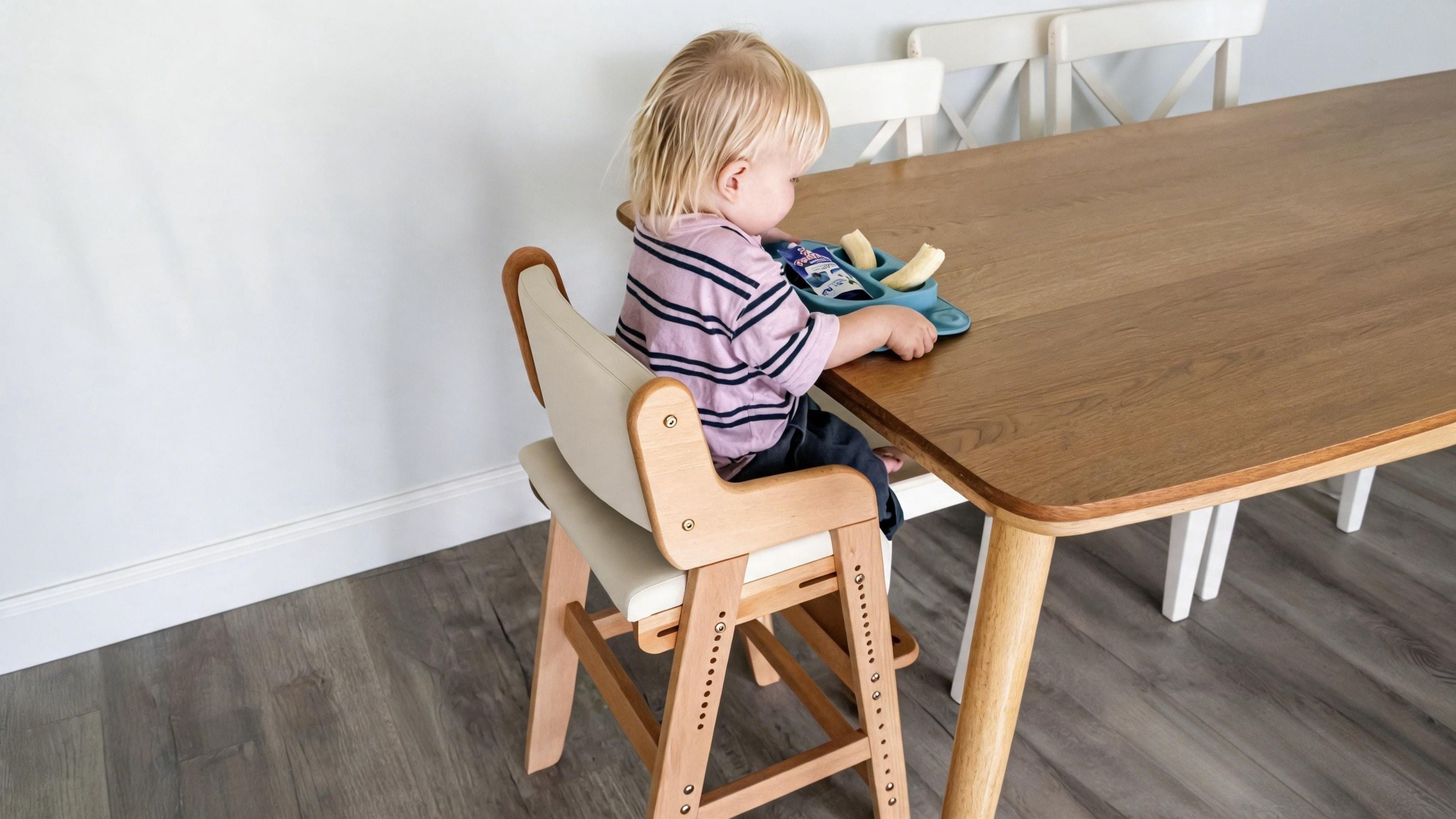
Toddler Dining Chairs: From High Chair to the Family Table
There is an awkward stretch between the high chair and an ordinary dining chair. A toddler has outgrown the tray and the straps, but sitting them on an adult chair leaves their chin near the table and their feet swinging in mid-air. A toddler dining chair bridges that gap: it brings a child up to the family table at the right height, on a seat they can climb into themselves and a base steady enough to trust. Here is what makes one safe, how to match its height to your table, and how the right chair carries a child from the high chair years into sitting down with everyone else.
In This Article:
- Moving On From the High Chair
- What Makes a Toddler Dining Chair Safe and Steady
- Matching the Height to Your Table
- Solid Timber and Living With It Day to Day
- Choosing Between the AURORA Chairs
- Frequently Asked Questions
Moving On From the High Chair
The move out of the high chair is less about a birthday than about the child. Once a toddler can climb up and sit steadily without the tray and straps holding them in, the high chair has done its job, and staying in it past that point keeps a capable child penned in. A toddler dining chair is the next step: an open seat at the family table rather than a separate perch bolted to the side of it.
What changes at this point is where the child sits. A high chair keeps a baby apart and up high; a toddler dining chair brings them in among everyone at the table itself. Sitting shoulder to shoulder at meals is how a young child learns the rhythm of eating together, from passing a bowl to waiting for others, and a chair that seats them at the real table is what makes that possible.
The chair that suits this stage is one a child can manage largely on their own. The AURORA Toddler Dining Chair is sized for a toddler to climb into and settle without being lifted every meal, which is part of what marks the step up from the high chair. Independence at the table starts with a seat a child can get into themselves.

What Makes a Toddler Dining Chair Safe and Steady
A toddler will lean, wriggle and push back from the table, so the first thing to look for is a chair that does not budge when they do. A wide, stable base is what keeps the chair planted through all that movement, and it matters more than any other single feature. A chair that rocks or slides teaches a child to be wary of it; one that sits firm lets them relax into the meal.
Solid timber does much of that work. The weight of real wood keeps the base down on the floor, and a solid frame stays square through years of a child climbing on and off. The AURORA Pro in beechwood is built from solid timber for this reason, so the chair a toddler pushes against holds its ground rather than flexing under them.
Look, too, at the edges and the finish. A toddler's chair gets grabbed, mouthed and wiped down after every meal, so rounded edges and a smooth, sealed surface are worth having. None of this is complicated to check: sit the chair on a hard floor, give it a firm push, and see whether it stays put and feels solid rather than light and skittish.
Matching the Height to Your Table
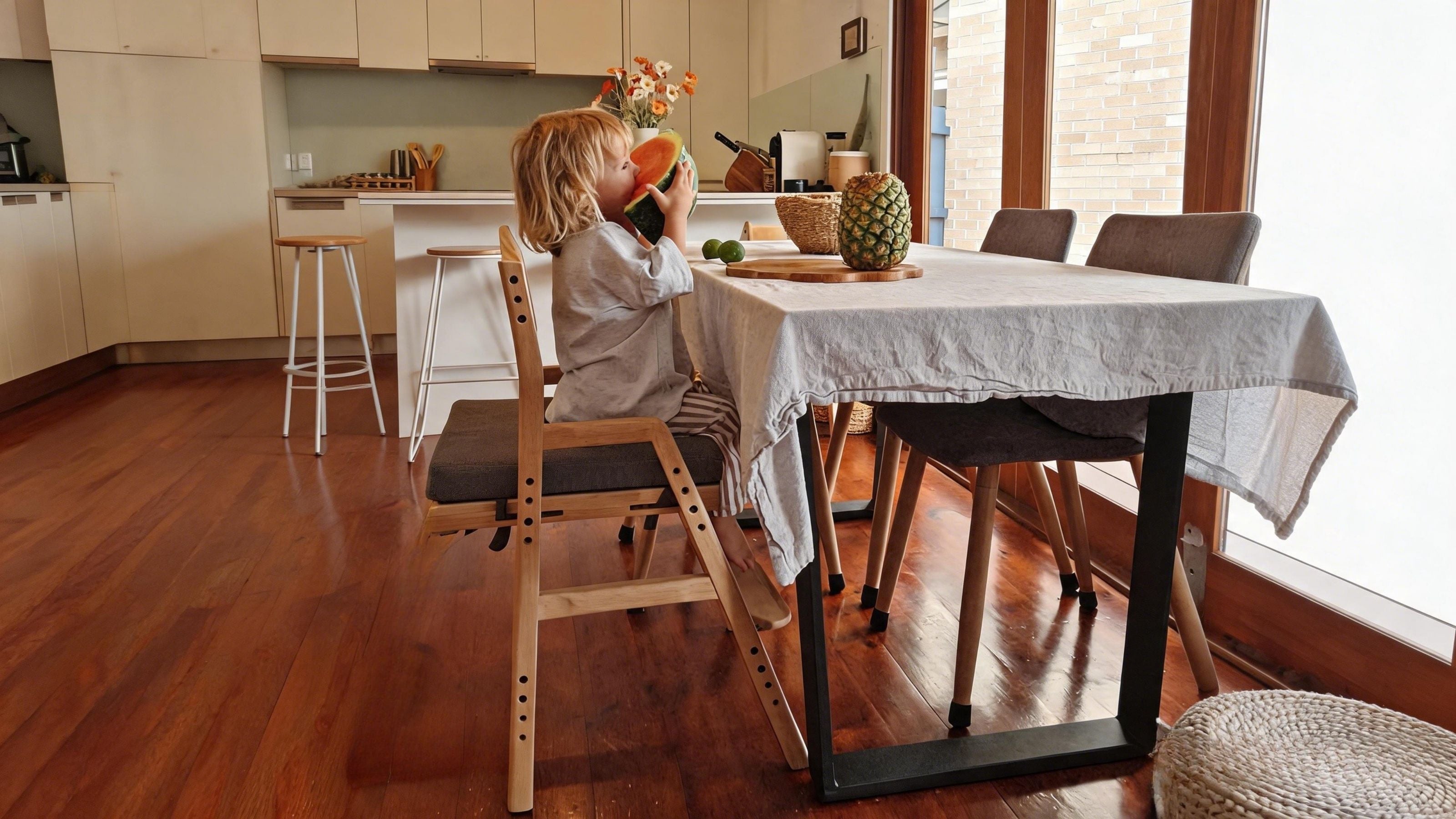
The whole point of a toddler dining chair is height, so this is the measurement to get right. At a standard dining table, a toddler chair should bring the child up so their forearms rest comfortably on the table top, the same way an adult chair does for a grown-up. Too low and they eat with their chin near the plate; too high and the table catches them at the chest.
Not every table is a standard dining height, though. A taller kitchen bench or island sits well above a dining table, and a chair sized for the dining table leaves a child stranded below the bench top. The AURORA Island Chair is the taller version for exactly this spot, bringing a toddler up to a kitchen bench or island so they can sit where the family gathers to eat and cook.
Measure before you choose. Note the height of the table or bench the chair will pull up to, and match the chair to that surface rather than guessing. Getting the height right is what turns the chair from something a child tolerates into a seat where they can reach their food, join the conversation and stay at the table as long as everyone else.
Solid Timber and Living With It Day to Day
A dining chair earns its keep at three meals a day, so how it holds up to daily life is as important as how it looks the day it arrives. Spills, sticky fingers and a wipe-down after every meal are the reality, and a solid timber chair with a sealed finish takes that in its stride where a flimsier seat would not last the toddler years.
Weight cuts both ways, and on balance it helps. A solid chair is heavier than a plastic one, which is exactly why it stays put when a toddler pushes against it, and it is still light enough for an adult to pull out and tuck back in at each meal. That steadiness is the trade for a chair you carry one-handed, and for a dining seat it is the right trade.
Because the AURORA chairs share a look across the dining and taller versions, a second child at a different height can sit on a matching chair rather than a mismatched one, and the set stays consistent as the family grows. A solid timber chair also holds its condition well enough to pass from an older child to a younger one when the first moves on to a full-size seat.

Choosing Between the AURORA Chairs
The choice among the AURORA chairs comes down to two questions: which table, and how much use. For a standard dining table, the AURORA Toddler Dining Chair is the straightforward pick, sized to bring a toddler up to the table at the right height on a steady base.
Where the chair will take heavy daily use and you want the sturdiest frame, the AURORA Pro in beechwood steps up the timber for a chair built to last through more than one child. And where the seat needs to reach a taller kitchen bench or island rather than a dining table, the AURORA Island Chair is the height-matched option.
Start from your table and how often the chair will be sat in, and the right AURORA tends to pick itself. Browse the full kids table and chairs range with the height of your table or bench in hand, and match a toddler dining chair to the spot at the table you want them in.
Frequently Asked Questions
When should a toddler move from a high chair to a dining chair?
It depends on the child rather than a set age. Once a toddler can climb up and sit steadily at the table without the high chair's tray and straps holding them in, they are ready for a toddler dining chair. Staying in the high chair past that point keeps a capable child penned in.
How do I choose the right height toddler dining chair?
Match it to the surface the child will sit at. At a standard dining table, the chair should bring the child up so their forearms rest comfortably on the top. A taller kitchen bench or island needs a taller chair, such as an island-height version, so measure the table or bench first.
Is a solid timber dining chair better for a toddler?
Solid timber helps in two ways: the weight keeps the base planted when a toddler leans or pushes against it, and a solid frame with a sealed finish stands up to spills and daily wiping down through the toddler years. It is heavier than plastic, which is what makes it steady.
Can one toddler dining chair last through more than one child?
A solid timber chair holds its condition well enough to pass from an older child to a younger one when the first moves on to a full-size seat. Choosing chairs that share a look across the dining and taller versions also keeps a set consistent as the family grows.
Bringing a toddler to the table? Browse the full kids table and chairs range and match a toddler dining chair to the height of your table or bench.





Leave a comment
This site is protected by hCaptcha and the hCaptcha Privacy Policy and Terms of Service apply.