
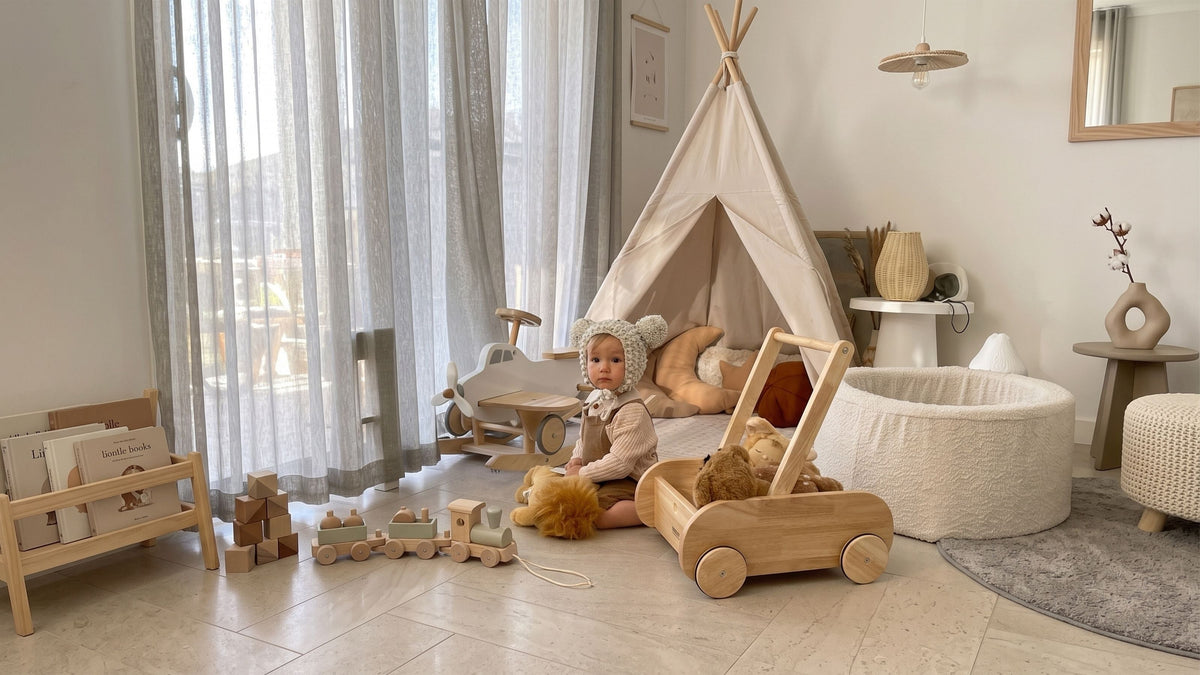
Wooden Push Walkers: Choosing a Safe First Walker
A baby who has just found their feet wants to be upright and moving, and a push walker gives them a way to do it. It is a simple thing: a sturdy frame on wheels with a handle a baby holds while they walk behind it. The right one steadies those first wobbly steps rather than running away from them. This guide covers how a wooden push walker differs from the seated kind, the signs a baby is ready for one, what separates a good push walker from a frustrating one, and how to use it safely in an Australian home.
In This Article:
- Push Walkers, Not Seated Walkers
- When a Baby Is Ready to Push a Walker
- What Makes a Push Walker Worth Having
- A Closer Look at a Wooden Push Walker
- Using a Push Walker Safely at Home
- From First Steps to Pretend Play
- Frequently Asked Questions
Push Walkers, Not Seated Walkers
The word walker covers two very different things, and the difference matters for safety. A seated walker is a frame a baby sits inside, with their feet on the floor and wheels that let them scoot around. A push walker is the opposite: the baby stands behind it on their own feet, holds the handle, and pushes it forward as they walk. Everything in our range is the push kind.
Seated walkers are widely discouraged in Australia, and for good reason. They let a baby who cannot yet walk move fast toward stairs, heaters and bench edges before they have the balance to stop, and they hold a baby in a position that does little for the muscles walking actually needs. A push walker asks the opposite of a baby: it only moves when they move it, on their own two feet.
That is why a push walker supports walking instead of replacing it. A baby holds on for balance, takes real steps, and builds the leg and core strength that walking depends on, all at a pace they set themselves. The walker is a handhold that happens to roll, not a seat that does the moving for them.
When a Baby Is Ready to Push a Walker
A push walker suits a baby who is close to walking, not one still learning to sit. The clearest sign is that a baby has started pulling themselves up to stand against the couch or a side table, and is cruising sideways along the furniture holding on. That usually happens from around twelve months, though every baby has their own timing.
A baby at that stage has the strength to stand and the urge to move, but not yet the balance to walk unaided. A push walker meets them there. It gives them a moving handhold to step behind, so they practise the walking motion with support before they can manage it alone, and it turns the drive to move into steps rather than frustration.
If a baby is not yet pulling to stand, a walker will not bring that milestone forward, and a not-yet-steady baby can tip a light walker as they lean on it. Time to standing and cruising is a good moment to introduce a push walker, and it stays useful through those first months of walking as they grow steadier on their feet.

What Makes a Push Walker Worth Having
The wheels matter most. A cheap walker on hard floors can shoot away the moment a baby leans on it, which is exactly what an unsteady new walker does not need. Look for wheels that roll at a steady, controlled pace rather than free-spinning ones. Wooden wheels rimmed with a soft rubber band grip enough to keep the walker moving with the child instead of ahead of them, and they are kinder to timber and tiles.
Stability comes next. A push walker should feel solid and sit close to the floor with a wide base, so it does not tip forward easily when a baby puts their weight on the handle. A handle that adjusts to a few heights is worth having too, so you set it to suit the child now and raise it as they get taller, keeping them upright rather than stooped over a handle set too far down.
Then there is the reason a baby keeps coming back to it. A tray or a small cart behind the handle turns the walker into something to load up and carry blocks or toys around in, and that game is often what motivates a hesitant walker to take another lap. Solid timber over plastic also means it holds up to being pushed, dropped and leaned on for more than one child.
A Closer Look at a Wooden Push Walker
The wooden push walker in our range brings those points together. It is built from solid rubberwood with a clear, non-toxic finish, and it suits a baby from around twelve months, the point where most babies are pulling up and ready to step behind a handhold.
Its wooden wheels are each rimmed with a soft rubber band, so it rolls at a steady pace rather than skating away on a hard floor, and it stays gentle on timber and tiles. The handle sets to three heights between 500 and 540 mm from the floor, so it starts at the right height for a new walker and rises as they grow through those first months on their feet.
Behind the handle sits an open, divided tray, the cart a child loads with toys and pushes around the room. That small feature does a lot of the work of keeping a new walker interested, giving them a job to do on every lap rather than only a frame to hold. Browse the baby walker range to see it alongside the doll pram walker.

Using a Push Walker Safely at Home
A push walker is safest with a bit of setup. Give it a clear, flat run of floor with no rugs to snag a wheel and no cords or clutter in the path, and keep it well away from the top of any stairs. An open stretch of a living room or hallway lets a baby push in a straight line and turn without running into furniture.
Floor surface changes how a walker behaves. On smooth timber or tile it rolls easily, while a thick rug can stop a wheel dead and pitch a baby forward, so watch the transitions between surfaces. Stay nearby while a baby is pushing, especially in the early weeks, since a new walker will lean, lunge and let go without warning while they work out how it moves.
One rule keeps a push walker doing its job: a baby walks behind it, they do not sit or ride on it. These walkers are built to be pushed, not to carry a child's weight as a seat, and using them as they are meant to be used is what makes them a safe way to practise walking.
From First Steps to Pretend Play
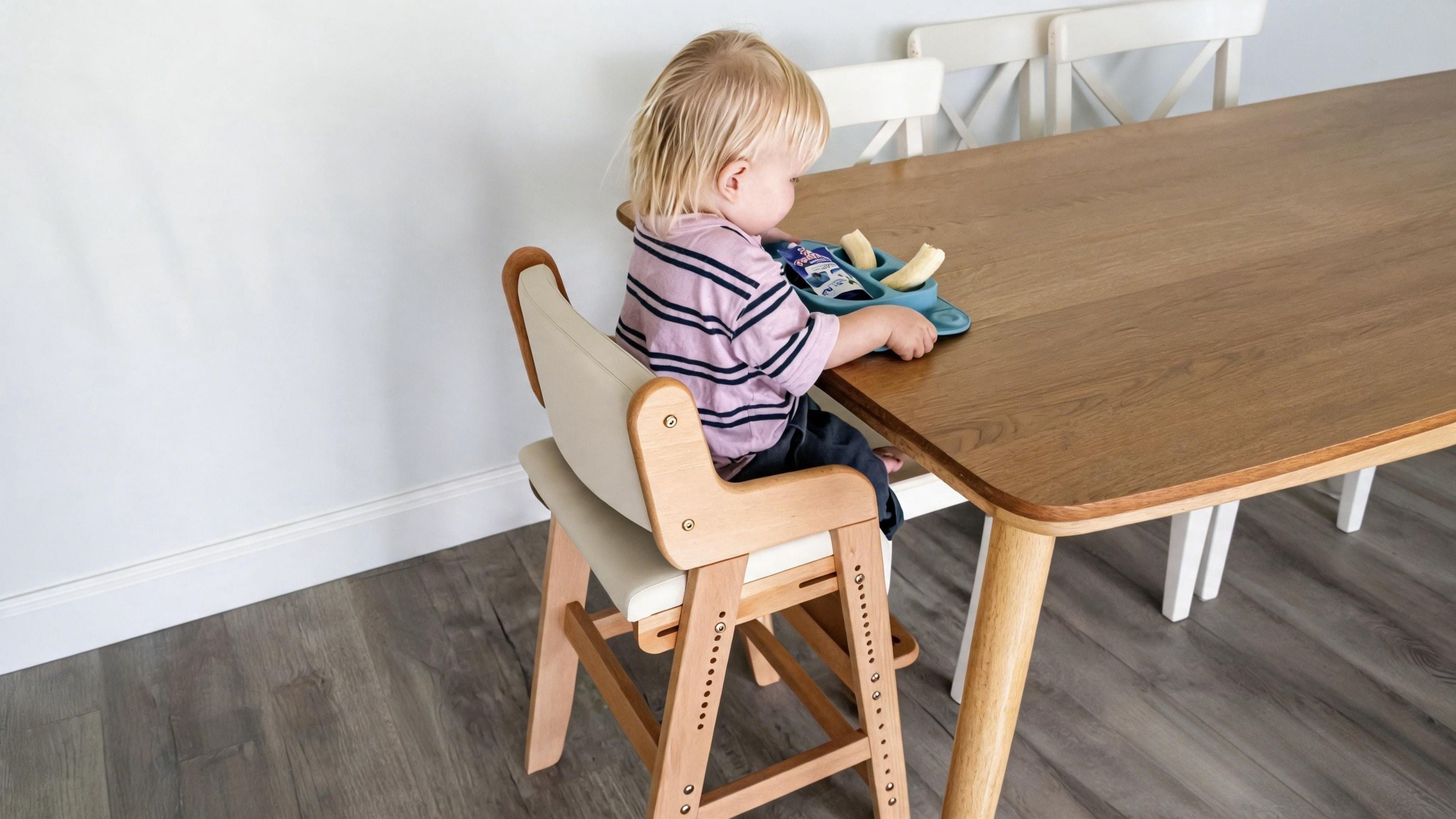
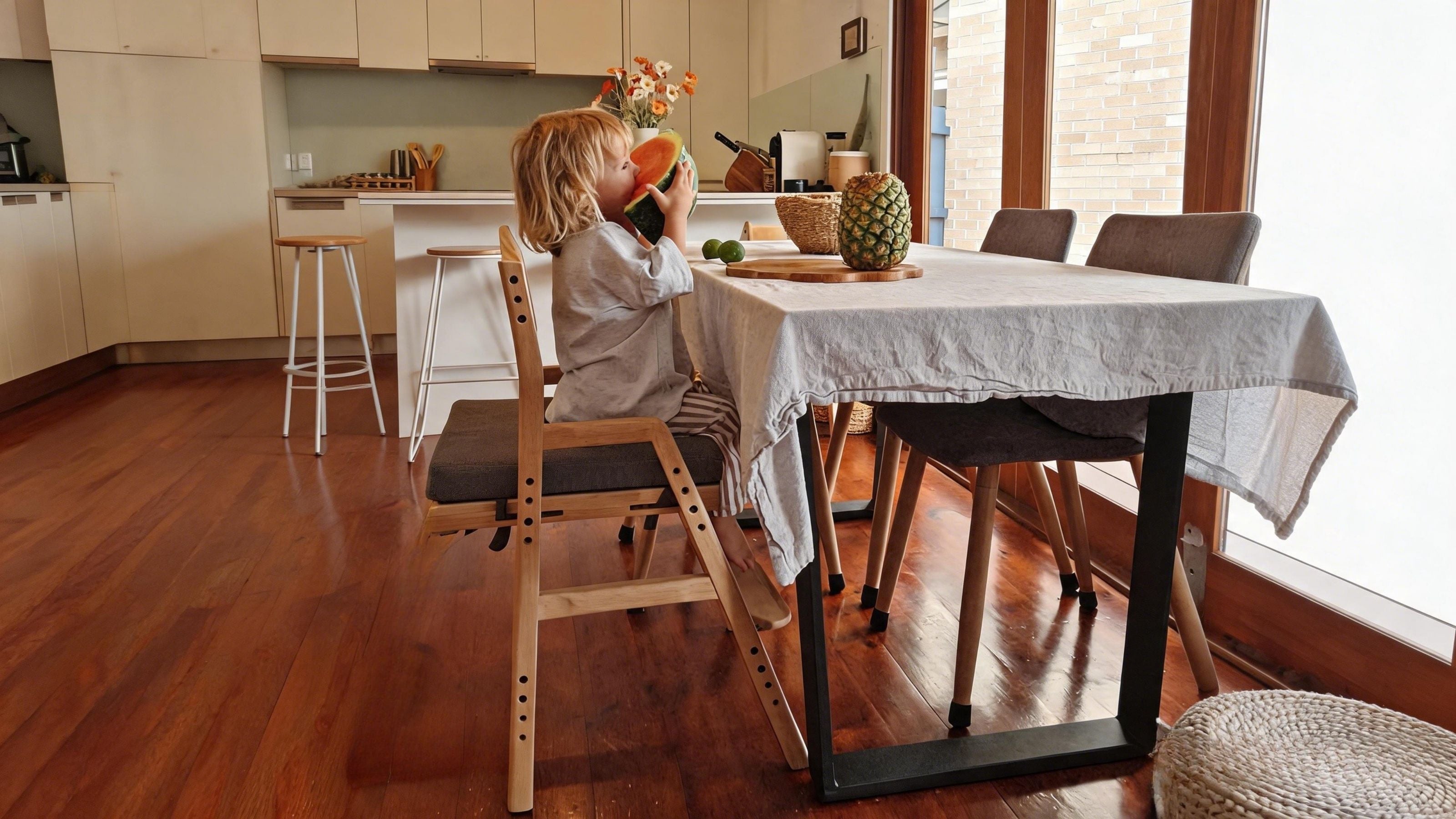
A push walker earns its place for a season, and there is a natural next step once a child is walking with confidence. Around the same time a baby is pulling to stand at the kitchen bench, some families add a learning tower so a standing toddler can join in safely up at counter height, another way to reward a child who wants to be up and part of things.
For an older toddler who is walking well, a push walker with a bit of story to it keeps the pushing game alive. A doll pram walker gives a confident walker something to push, steer and look after at once, carrying the same steady-wheeled walking into pretend play. It suits a later stage than a first walker, so it is worth matching to where a child is up to.
If you are choosing a first walker, start from the child in front of you: are they pulling to stand and ready to step behind a handle, or already walking and after a game to go with it. Reading the milestone, as with other early movements, matters more than the date on the calendar.
Frequently Asked Questions
What age can a baby use a wooden push walker?
A push walker suits a baby who is pulling up to stand and cruising along the furniture, which usually starts from around twelve months. The wooden push walker in our range is suitable from about twelve months. Before a baby is pulling to stand, a walker will not bring that milestone forward.
Are push walkers safer than seated baby walkers?
Push walkers work differently. A baby stands behind a push walker and moves it on their own feet, which supports walking, while a seated walker holds a baby who cannot yet walk and lets them scoot around fast. Seated walkers are widely discouraged in Australia, which is why our range is push-along only.
What should I look for in a wooden push walker?
Wheels that roll at a steady pace rather than free-spinning ones, so the walker moves with the child instead of shooting away on hard floors. A stable, low frame that does not tip forward easily, an adjustable handle height, and a tray to carry toys that keeps a new walker interested.
Can a baby ride on a push walker?
No. A push walker is built to be pushed from behind while a baby walks on their own feet, not to carry a child's weight as a seat. A baby walks behind it. Using it that way is what makes it a safe way to practise walking.
Choosing a first walker? Browse the baby walker range and match a steady wooden push walker to where your baby is up to.





Leave a comment
This site is protected by hCaptcha and the hCaptcha Privacy Policy and Terms of Service apply.